- For God and country - the curious intersection between religious authority and intelligence agencies born from the unusual times of the Cold War
- We are running out of energy production and distribution. It is primarily because of the increased use by data centers and, of course, AI data centers. This means AI datacentres are going to have to go—nuclear.
- Padishah wants to take Greenland, ignoring its people and laws, partly to help tech billionaires create unregulated "freedom cities" - the real emerging face of MAGA is Megacorp Oligarchy, straying far from its once populist base
- Staying on this seminal and important theme, Padishah's administration is partnering closely with big tech companies through public-private deals to build a powerful surveillance state. These partnerships involve the government buying stakes in private firms, merging corporate and state interests.
- Revolutions happen when many problems build up and elite groups break apart. Counter-elites with different motives push for change but often fight among themselves. If trust breaks down, revolutions become chaotic and self-destructive.
- Secularist regimes in modern history have often caused as much or more violence than religious groups. Combative and eliminationist secularism led to harsh attacks on religion, especially in places like France, Spain, Mexico, and China.
- A persuasive case against streaming TV shows
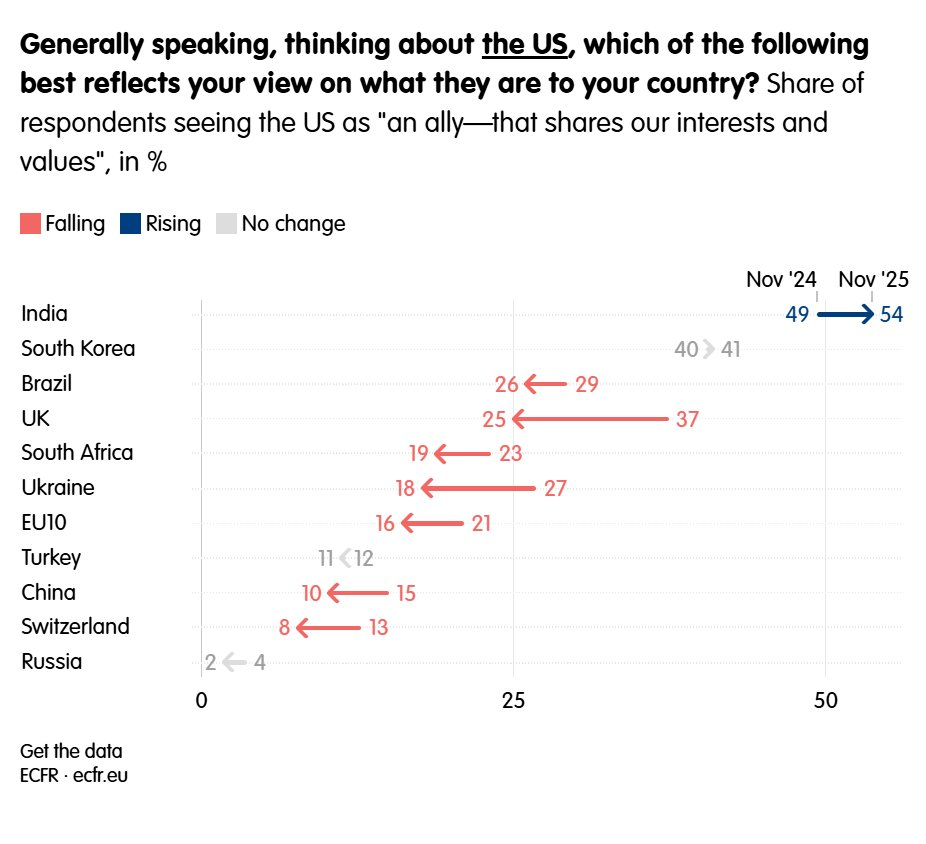
- The continuous decline of GAE's diplomatic competence in this particularly stunning study
- Sobering podcast on why we are essentially now living through socialised hyperfinancialism aka "The Bailout Economy"
- Interesting piece that compliments my own recent take about the implications for state sovereignty as megacorporations start to take up more of the infrastructural requirements to wage war
- "Saudi Arabia is running a $44 billion deficit while fighting an open influence war with the UAE across Yemen and the Red Sea. At the same moment, the Pentagon has become a 49% equity holder in a Saudi rare-earth refinery. This is the collision of three forces: a fiscally stretched kingdom levering into transformation, a nimbler UAE building a maritime empire, and a Trump administration that no longer just sells alliances but buys into them through equity stakes. The US is picking a structural favourite in the Gulf. For Riyadh, it’s both lifeline and leash. For Abu Dhabi, it’s a signal. For the rest of us, it means supply chain wars are being fought through balance sheets and port concessions in real time. Full piecebreaks down the fiscal data, the Yemen mechanics, the rare-earth JV, and what happens when middle powers monetise geography while undercutting each other."
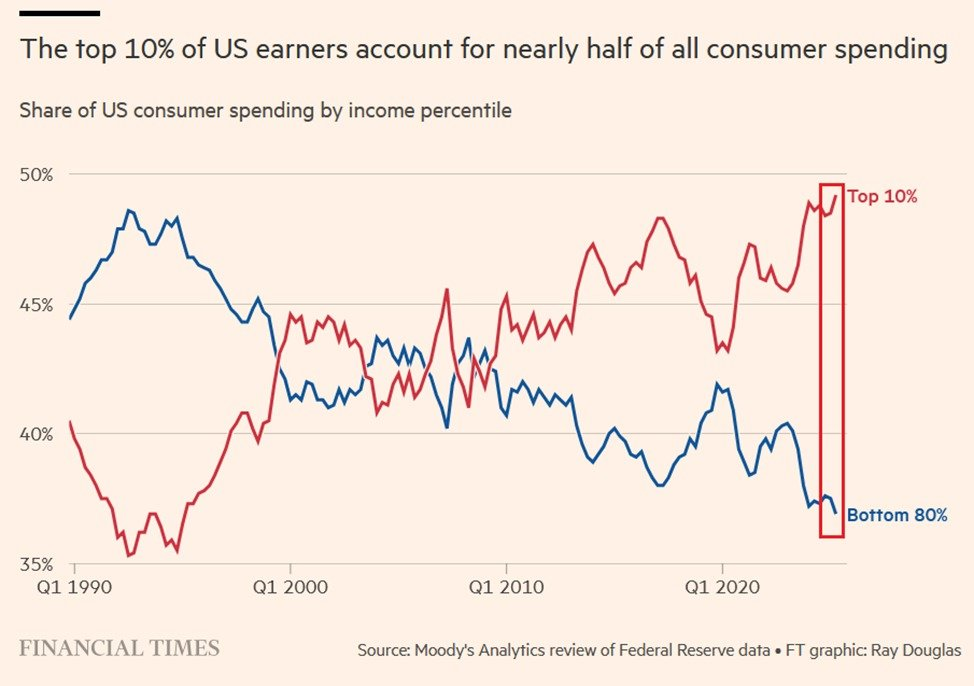
- Further strangeness about the nature of hyperfinancialist regimes - within GAE the top 10% account for now nearly half of all consumer spending
- Little read piece speculating on the Doobai residential property cycle - watch this particular market as things start to heat up more globally
- Very interesting paper by Chinese economists on the role of multinational corporations in the US–China trade conflict: US-based multinational corporations (MNCs) depend on extracting surplus value from China via a "financialization–offshoring nexus", with 4 parts: 1. MNCs offshore production to China and extract a substantial share of value added. 2. China's export of outsourced goods from MNCs generates US service trade revenues through payments for US corporate intellectual property rights. 3. To minimize tax liabilities, US MNCs retain most offshore earnings abroad and invest in short-term financial assets, rather than repatriating capital. 4. Profits from final sales in the US market are primarily used to enrich shareholders (via dividends, stock buybacks, and acquisitions), rather than reinvest in domestic production. US financialization depends on offshoring (and extraction of surplus value from China), and "shareholder value imperatives reinforce the drive to offshore", making reshoring of US manufacturing very difficult, if not impossible.